

Like using the keys below; only I can see who you are.
For your tomorrow, we gave our today.
John Maxwell Evans
Not everyone honors all graveyards and shrines, especially military ones, for a lot of reasons. In 1985, President Ronald Reagan drew criticism for his visit with West German Chancellor Helmut Kohl to a cemetery in Bitburg, Germany, that contained the graves of 2,000 German soldiers who died in World War II. Critics, including Holocaust survivor and Nobel Laureate Elie Wiesel, became especially incensed upon learning that the cemetery contained the graves of 49 deceased SS members.
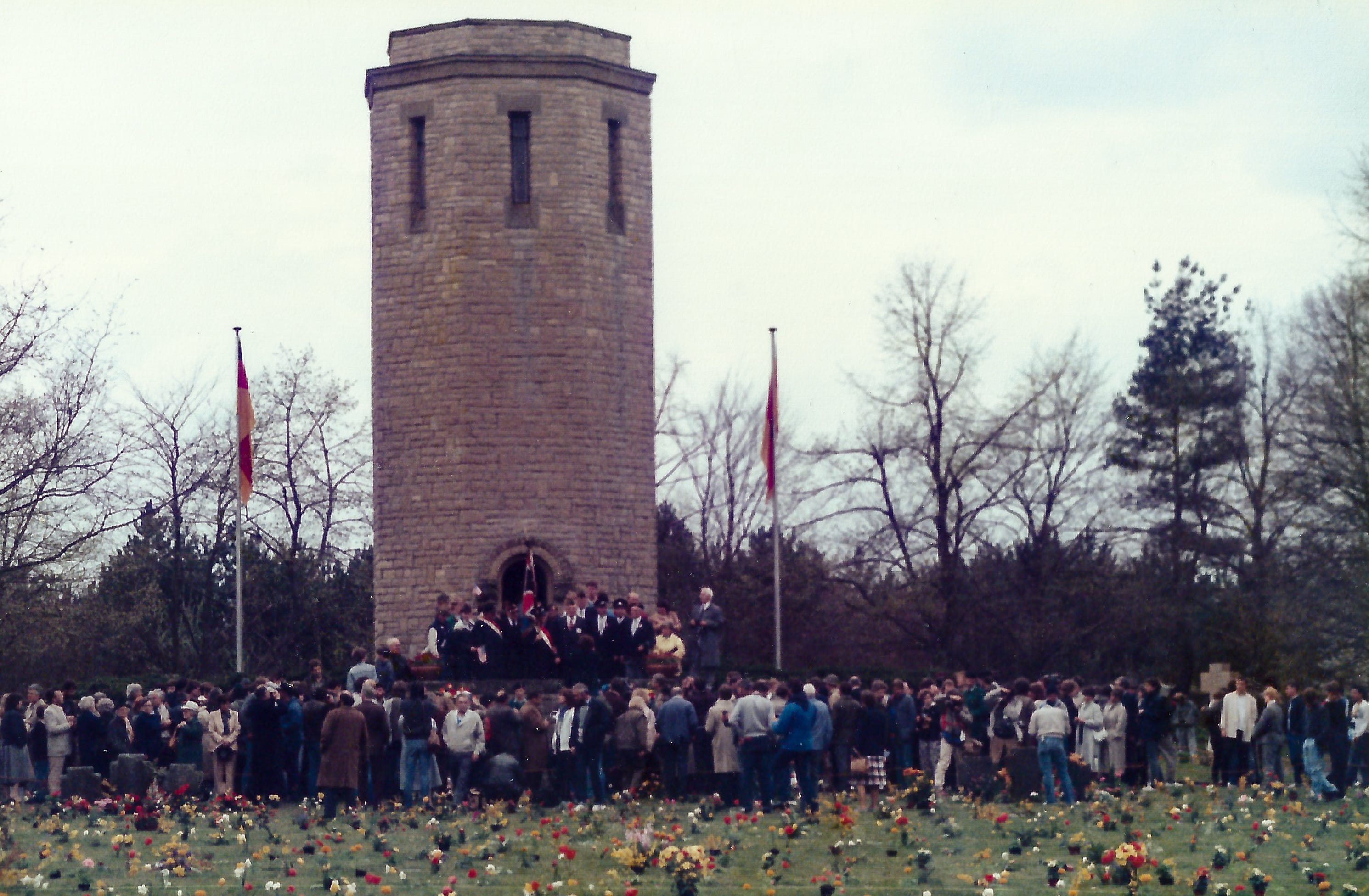
Which SS were they in?
While it is popular (and partially accurate) to say that the Nazis tasked parts of the SS with implementing the Final Solution, it’s like saying water is wet. By 1944, it was impossible to have a profession that required a license, work for any part of the government or the Nazi party, or contract with the government without paying dues to the Allgemeine (general)-SS . Most senior military officers were also members, besides being party members, if they wanted to get promoted. And several German Army divisions built their own death camps in Russia, and many more took part in what is now called “ethnic cleansing,” and even “genocide” operations. Anyone condemning them lately?
The Waffen-(armed)-SS was a unique combat organization.
First formed as a bodyguard, the Waffen-SS grew from three regiments to over 38 divisions—about 900,000 men at its peak in 1944, outnumbering employees of the SS itself. Functionally, its units answered to the army commanders they served with, and by 1944 about a third of their ranks were draftees. Waffen-SS units included Germans and anyone else who wanted to serve, including Norwegians, Belgians, Englishmen, and Americans. While the organization took part in many atrocities (the International Tribunal declared it a criminal organization), so did the German Army. They all took a personal oath to Hitler; so did all German officers. The SS-Totenkopfverbände (TV, Death’s Head Units) ran the camps. Additional organs of the SS included the Gestapo and the Sicherheitsdienst (SD).
They all get painted with the same broad SS = war criminals brush.
If members of certain organizations have no moral right to be buried with “real” soldiers because of what’s on their collars, it’s hard to explain what morally differentiates the handful of poor (dead) sods in Bitburg from the camp guards. Revisionists can accept pragmatic reasons for treating them differently, but we should not dishonor all of them at the same time just because of who they’re buried with.
The Yasukuni Shrine is no different.
Emperor Meiji founded this Shinto shrine—the name means Peaceful Country Shrine—in Tokyo in 1869, and it commemorates all those who died in the service of Japan beginning in 1868 (the Boshin War). The shrine lists the names, origins, birthdates, and places of death of over two million people, including a thousand convicted war criminals from the Pacific War, and it commemorates anyone who died on behalf of Japan, including Koreans and Taiwanese, and it honors the souls of all the people who died during World War II, regardless of their nationality.
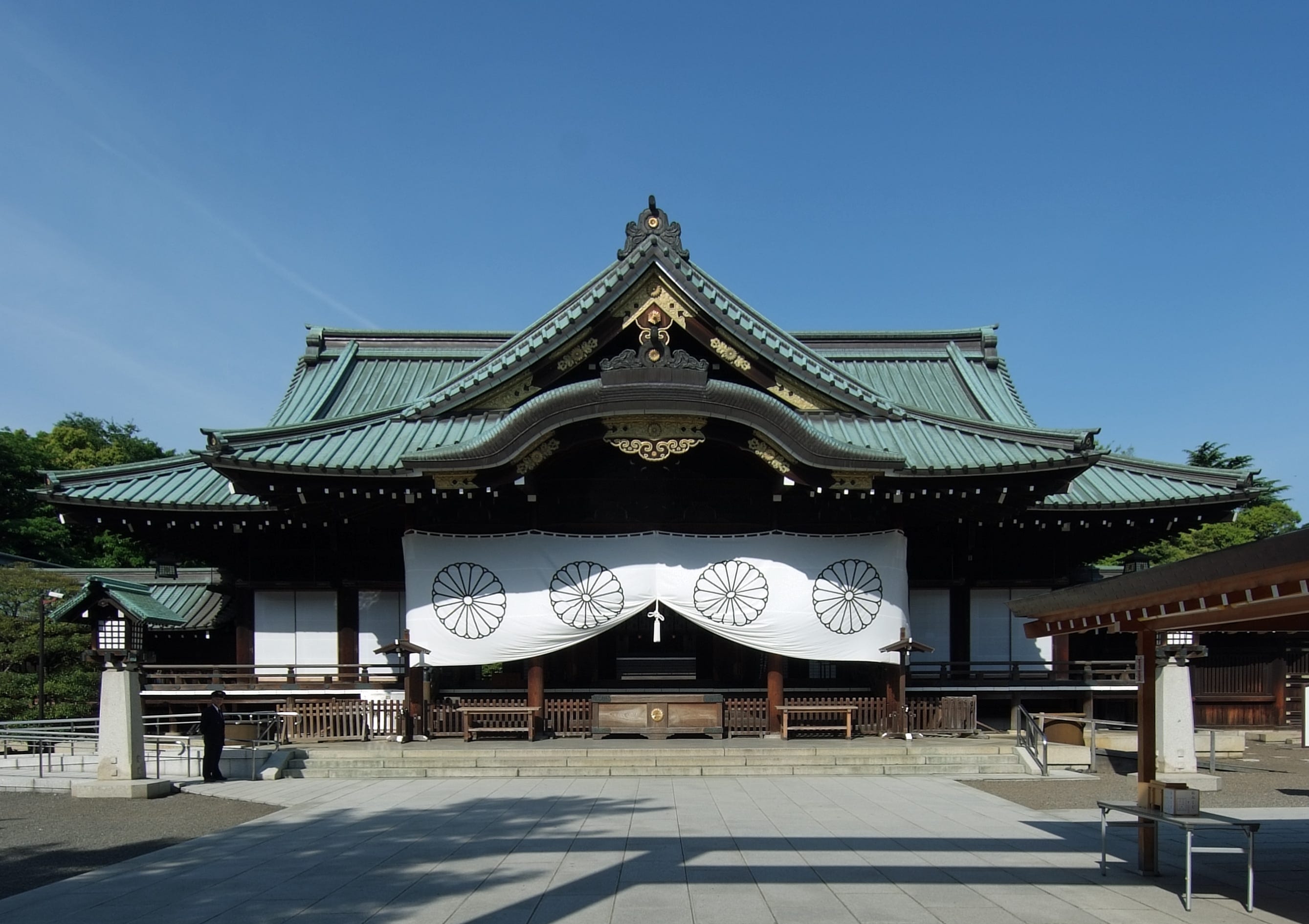
To dishonor the Yasukuni Shrine is to misunderstand both Shinto and the shrine…except for modern politics.
In the Shinto faith, the souls of the departed—kami—linger among the people they lived among, and people cannot ignore them just because they may have done something wrong in life. In Japanese culture, the dead are still part of the family. The Showa Emperor Hirohito visited the shrine eight times between the end of the war and 1975. However, he thereafter boycotted the shrine because of his (sudden) displeasure over the enshrinement of top convicted Japanese war criminals. Neither his son, the Heisei Emperor Akihito, nor his grandson, the Reiwa Emperor Naruhito, has visited the shrine because of those same “optics.” The Japanese Government’s involvement with the shrine remains highly controversial in some circles for reasons that have nothing to do with most of the souls honored there, which include Americans who firebombed Japan and those who died in the Bataan Death March.
History teaches us that there is not just this side and that side. But that's all the sides that most people can handle.